
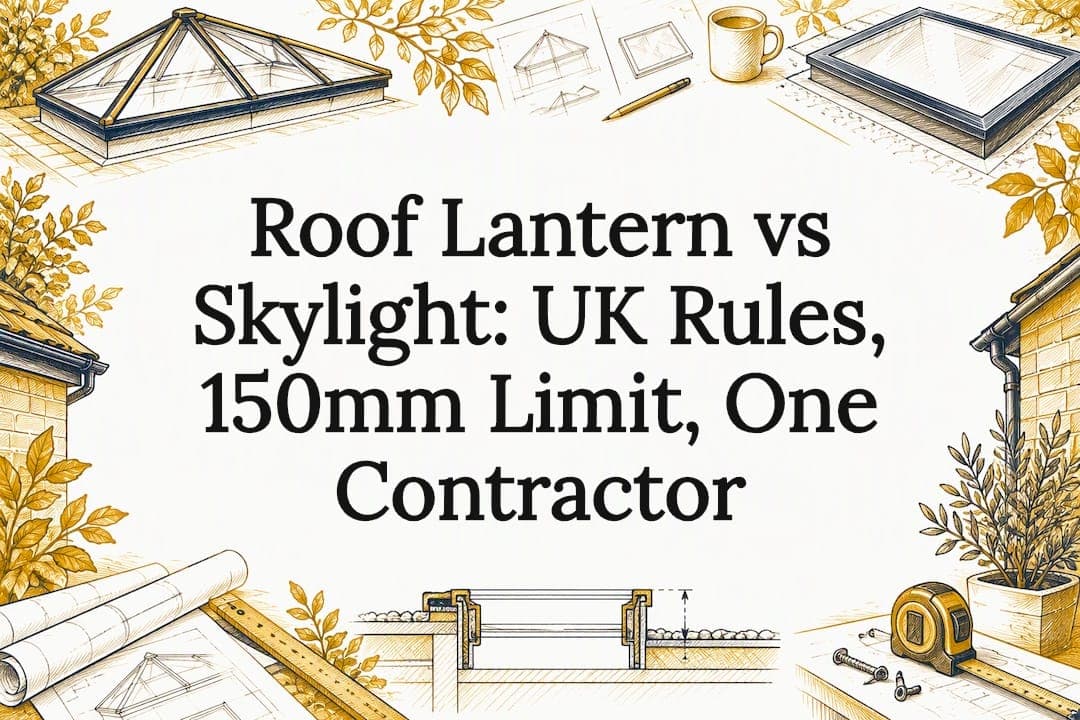
Choose a roof lantern when you want architectural drama and extra headroom on a flat-roof extension, and choose a skylight when you need a lower-cost, low-profile solution for a pitched roof with easy ventilation. Most installations fall under permitted development, but you still need to check the 150mm projection limit and confirm building-regulations compliance before ordering anything.
TL;DR:
- Basic polycarbonate skylights start around £250, while uPVC lanterns typically begin at £600 to £700 before installation; bespoke sizes and electric controls raise costs.
- Permitted development allows projection up to 150mm, with units no higher than the roof’s highest point; boundary facing installations may require obscure glazing or restricted opening.
- Both options depend on glazing specification: triple glazing reduces heat loss, while frames without a certified thermal break can create cold spots and condensation.
- Use a structural engineer for larger openings, bespoke lanterns, or load bearing changes, and confirm the quote covers flashing, insulation details, and exact dimensions.
Table of Contents
- What is a roof lantern and what counts as a skylight?
- How do roof lanterns and skylights compare in practice?
- What do roof lanterns and skylights cost to install?
- What planning and building-regulations rules apply?
- How do you choose between a roof lantern and a skylight?
- How a managed extension project coordinates the glazing
- Which option actually suits your project?
- Let us manage your extension and rooflight choices
- FAQ
- Sources
What is a roof lantern and what counts as a skylight?
A roof lantern is a three-dimensional glazed structure that sits on top of a flat roof, raised on an upstand that typically measures around 150mm, creating a box-like feature with glazed sides and a glazed or ridged top. The upstand is what gives a lantern its lift: it raises the ceiling line inside the room and lets light spread across a wider arc than a flat panel ever could. Lanterns are usually finished in aluminium, timber or uPVC, with aluminium favoured for slimmer sightlines on larger spans.

A skylight, often called a rooflight, is a window set into a roof plane rather than raised above it. It can be fixed or openable, and it sits far lower in profile than a lantern, which makes it the natural choice on pitched roofs where a raised box would look out of place. Fixed units are simpler and cheaper; opening units add ventilation but bring extra moving parts and, often, electric or manual controls.
A few variants are worth knowing before you compare prices:
- Flat rooflights sit almost level with the roof surface and suit flat or low-pitch roofs where a lantern's height would feel excessive.
- Conservation rooflights are built to a slimmer, more traditional profile for listed buildings or conservation areas.
- Frameless glass panels minimise visible framing for a cleaner look, usually at a higher price point.
How do roof lanterns and skylights compare in practice?
The two options solve the same problem (getting daylight into a room) in different ways, and the differences show up fast once you compare them side by side.
- Light and appearance: a lantern spreads light from multiple glazed faces and a vertical drop, filling a room evenly even as the sun moves; a skylight throws a single, more directional beam that shifts across the day.
- Architectural impact: a lantern reads as a feature in its own right, often the centrepiece of a kitchen-diner extension; a skylight is quieter, doing its job without drawing the eye.
- Thermal performance: both rely on the glazing specification, and double glazing is standard while triple glazing cuts heat loss further; frames without a proper thermal break are where cold spots and condensation tend to start, particularly at the junction between frame and roof insulation.
- Maintenance and cleaning: flat skylights shed rain less efficiently than a pitched lantern roof and can collect debris; lanterns, with their angled glazing, generally self-clean better in heavy rain but have more glass surface and sealant lines to check.
- Suitable roof type: lanterns need a flat or very low-pitch roof to accommodate the upstand; skylights work on both pitched and flat roofs, which makes them the more flexible of the two.
Pro Tip: Ask your installer to confirm whether the frame carries a certified thermal break before you sign off on a spec, not after the glazing is on site.
What do roof lanterns and skylights cost to install?
Costs vary enormously depending on size, glazing and finish, but the market gives a rough shape to work from. Basic polycarbonate skylights can be found from around £250 at the low end, while basic uPVC lanterns typically start from around £600 to £700 uninstalled. Bespoke aluminium or timber lanterns sit higher again, with custom sizes, upgraded glazing and electric opening mechanisms pushing costs well beyond those entry points.
Several factors drive the final bill:
- Bespoke sizing costs more than a standard off-the-shelf unit.
- Glazing specification, including triple glazing or low-emissivity coatings, adds to both material cost and thermal performance.
- Electric opening mechanisms and rain sensors increase the unit price and add wiring work.
- Structural strengthening, where a larger opening is needed, brings in additional labour and materials.
- Access, scaffolding and crane hire for large or heavy lanterns can be a significant line item on its own.
A roofer or carpenter can usually handle a straightforward skylight replacement, but a larger structural opening, a bespoke lantern, or any load-bearing change calls for a structural engineer and a specialist supplier working alongside the main trade. Measure twice before ordering: mismeasurement remains one of the most common causes of delay and costly returns, so confirm whether a quoted dimension refers to the structural opening or the external upstand before anything is cut.
What planning and building-regulations rules apply?
Most rooflight and lantern installations fall under permitted development, which generally allows them provided the glazing does not project more than 150mm beyond the roof plane and sits no higher than the highest part of the existing roof. Side-facing rooflights usually need obscure glazing or restricted opening where they face a boundary. Planning permission becomes more likely on listed buildings, in conservation areas, or where the installation affects a principal elevation, so it is worth checking your own situation before committing to a design.
Even where planning permission is not needed, building-regulations approval is commonly required because the roof structure is being altered. That approval typically covers the structural opening, the load the roof will carry, the U-values of the glazing, ventilation where relevant, and fire performance near boundaries. The practical step is simple:
- Check your local planning authority's guidance before finalising a design.
- Ask your installer or contractor to confirm building-regulations sign-off is included in their quote.
How do you choose between a roof lantern and a skylight?
A short checklist keeps the decision grounded in your actual roof and room rather than in photos you have seen online.
- Roof type: flat or low-pitch roofs can take a lantern; pitched roofs generally call for a skylight.
- Room use and desired effect: a kitchen-diner wanting a feature ceiling favours a lantern; a bathroom or landing needing simple daylight suits a skylight.
- Ventilation needs: an opening skylight adds airflow that a fixed lantern cannot.
- Budget band: decide your ceiling early, since bespoke lanterns can expand a budget quickly.
- Maintenance tolerance: factor in how easily you can reach the glass for cleaning.
- Access for cleaning and repair: check whether scaffolding or a ladder is realistic for the roof pitch and height.
When comparing quotes, ask suppliers the same set of questions every time: the U-value of the glazing, whether the dimension quoted is the upstand or the structural opening, who supplies the glazing versus who fits the flashing and insulation detailing, the warranty length and lead time, and whether a structural assessment is included in the price.
Pro Tip: Get the flashing detail, thermal break specification and exact dimensions written into the quote itself, not just discussed on site.
How a managed extension project coordinates the glazing
Getting the light right means more than picking a product: the structural opening, insulation detailing and glazing specification all need to work together, and planning or building-regulations paperwork has to be handled alongside the build rather than as an afterthought. Within our managed design-and-build process, we coordinate structural checks, glazing choice and insulation detailing under one team, which reduces the measurement errors and trade handover gaps that cause delays on rooflight and lantern installations.

Which option actually suits your project?
If you are building a flat-roof kitchen-diner and want a feature ceiling, a lantern is the better fit. If you are lighting a pitched-roof bedroom or bathroom on a tighter budget, a skylight does the job. Either way, get a site survey and a written quote before committing.
— Raja
Let us manage your extension and rooflight choices
We design and build bespoke house extensions across the West Midlands, handling planning, structural checks and glazing specification as one coordinated project.
FAQ
What are the disadvantages of roof lanterns?
Roof lanterns generally cost more than skylights, both to buy and to maintain, because of their larger glazed area and bespoke sizing. They also require a flat or low-pitch roof and an upstand, which limits where they can be fitted.
Why have skylights become less common in some projects?
Skylights have not disappeared; they remain a cost-effective, flexible choice for pitched and flat roofs alike. Where roof lanterns have grown in popularity instead, it tends to be because homeowners building flat-roof extensions want the extra light spread and architectural feature a lantern provides.
Do I need permission for a roof lantern?
Most roof lanterns and skylights fall under permitted development provided they do not project more than 150mm beyond the roof plane and sit no higher than the existing roof. Listed buildings, conservation areas and principal elevations are more likely to need planning permission, so check your local authority's position first.
Which is better, a roof lantern or a skylight?
Neither option is universally better: a lantern suits a flat-roof extension where you want a dramatic feature and extra headroom, while a skylight suits a pitched roof, a tighter budget or a need for ventilation. The right choice depends on your roof type, room use and budget band.